The Small Visual Clutter Fixes That Change a Room's Mood
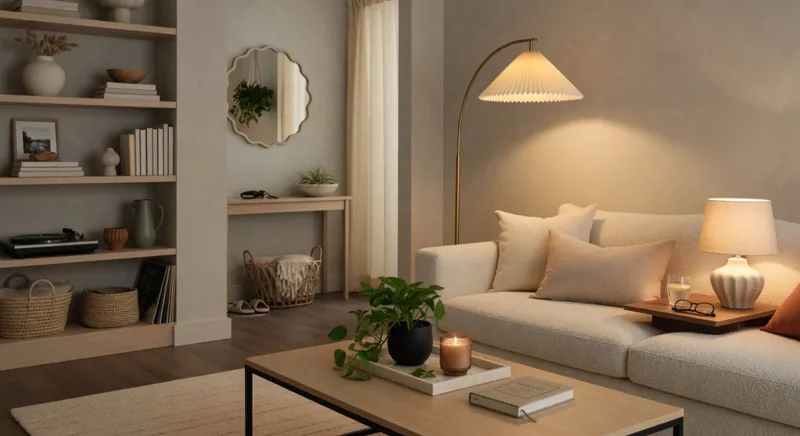
The small visual clutter fixes that change a room’s mood rarely require a major renovation. Clearing one crowded surface, hiding a tangle of cords, or adjusting a lamp can make a space feel calmer, brighter, and easier to live in almost immediately.
Why Visual Clutter Affects How a Room Feels
Visual clutter is more than a style issue. When the eye constantly lands on unfinished tasks, scattered objects, and competing patterns, the room can feel stressful even when it is technically clean. Research has linked subjective clutter with lower well-being, reduced focus, and more negative emotions.[1][2]
The goal is not to create a perfectly minimal home. A room should still reflect the people who live there. Instead, aim for visual clarity: fewer competing focal points, more open surfaces, and practical storage that makes everyday items easy to put away.
Start With the Surfaces You See First
Every room has a visual “landing zone”—the area your eyes notice when you walk in. In a living room, it may be the coffee table or television console. In a bedroom, it could be the nightstand. In a kitchen, it is often the countertop near the entrance.
Remove everything from that surface, then return only the items that are useful or genuinely meaningful. A simple arrangement often works best:
- One functional item, such as a lamp or tray
- One natural element, such as a plant or flowers
- One personal object, such as a framed photograph or favorite book
This creates breathing room without making the space feel empty. Grouping small objects on a tray also makes the area appear more intentional and makes cleaning faster.
Hide Cords, Remotes, and Everyday Technology
Few things make a room look messier faster than exposed cables. Loose charging cords, power strips, and television wires create visual lines that draw attention away from the room’s design.
Use cable clips along the back of furniture, a cord box for power strips, or a small lidded basket for chargers and remote controls. Choose storage that matches the room’s color palette so it blends in rather than becoming another visual feature.
In a home office, route cables toward the back edge of the desk and keep only the devices needed for the current task in view. This small change can make the workspace feel more focused and less mentally demanding.
Reduce the “Open Storage” Effect
Open shelving is attractive, but too many visible objects can create visual noise. Books, baskets, decorations, and daily necessities may each look harmless, yet together they can overwhelm a wall.
Use the 70-30 Display Rule
Try filling approximately 70 percent of a shelf and leaving 30 percent open. The empty space separates groups of objects and gives the eye a place to rest. Arrange items by height, but avoid lining everything up with rigid precision.
For practical items that do not add to the room’s mood, use closed cabinets, fabric bins, or matching storage boxes. The best home organization systems are the ones that make tidying effortless rather than demanding constant discipline.
Make the Entryway Feel Lighter
A crowded entryway can make the entire home feel chaotic. Shoes, bags, mail, and coats tend to collect there because the area handles so many daily transitions.
Create a clear system with three simple zones:
- Daily essentials: Keep keys, wallets, and sunglasses in one small bowl or wall-mounted organizer.
- Outerwear: Use only enough hooks for the coats currently in rotation.
- Temporary items: Add a basket for returns, library books, or things that belong elsewhere.
Clear floor space matters especially here. Even a narrow walkway can make the entrance feel more welcoming when shoes and bags are contained.
Use Lighting to Change the Room’s Mood
Lighting is one of the fastest ways to shift the atmosphere of a room. A single bright overhead fixture can make a space feel flat or harsh, while layered lighting creates warmth and depth.
Combine ambient lighting, task lighting, and accent lighting where possible. A floor lamp beside a sofa, a table lamp on a console, or a small picture light can soften shadows and draw attention to attractive features.
Warm white light generally suits relaxing evening spaces, while neutral white light is more practical for work areas and focused daytime tasks.[3] Replace overly bright bulbs with dimmable options when possible. Adjustable light gives one room several moods without changing the furniture.
Control Color and Pattern Competition
Visual clutter is not always caused by too many objects. Too many colors, prints, or finishes can have the same effect. If a room feels restless, look for repeated high-contrast elements: patterned cushions, colorful packaging, busy artwork, and mismatched storage.
Choose one dominant color, one supporting color, and a small accent shade. You do not need to remove every bright object; simply distribute strong colors instead of clustering them in one area.
Large artwork can also improve visual calm when it replaces several small pieces. Leave enough wall space around it so it reads as a focal point rather than part of a crowded gallery.
Finish With a Five-Minute Reset
The most effective decluttering routine is one you can repeat. At the end of the day, set a timer for five minutes and focus only on visible clutter:
- Return misplaced objects to their homes.
- Clear the main horizontal surface.
- Fold or hide loose blankets.
- Put away shoes, dishes, and paperwork.
- Turn off harsh lights and switch on softer lamps.
This short reset reduces the visual reminders of unfinished tasks and helps preserve the room’s calmer mood. It also avoids the pressure of treating decluttering as a massive weekend project.
A Calmer Room Starts With Less Competition
The small visual clutter fixes that change a room’s mood are simple because they work with what you already own. Clear the first surface you see, conceal distracting cords, limit open storage, layer the lighting, and give everyday objects a designated home.
A comfortable room does not need to be empty or perfectly styled. It needs enough order for the features you love—and the people who live there—to stand out.