What a Low-Pressure Evening Can Look Like in a Busy Household
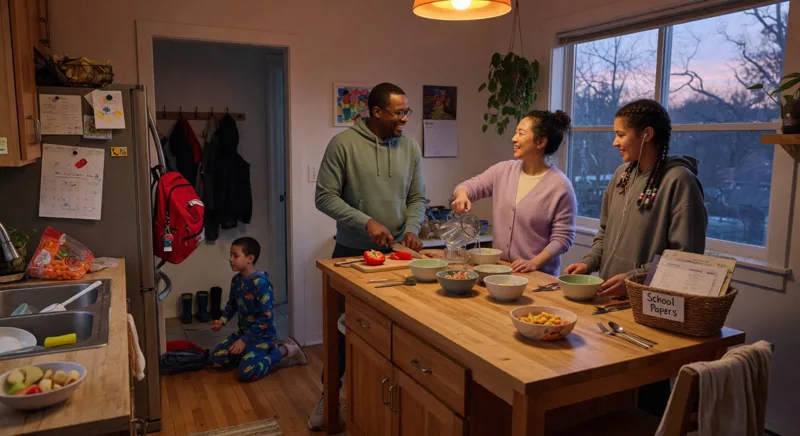
What a low-pressure evening can look like in a busy household is not a perfectly tidy home or a carefully timed schedule. It is a flexible evening routine that helps everyone eat, reconnect, reset, and get enough rest without adding another source of pressure.
Start With a Softer Definition of Success
Busy families often imagine a successful evening as one that includes a homemade dinner, clean rooms, homework, meaningful conversation, exercise, and an early bedtime. That list can quickly become overwhelming.
A calmer approach focuses on a few essentials:
- Everyone has something reasonably nourishing to eat.
- Important tasks for tomorrow are made easier.
- Family members have a chance to decompress.
- Bedtime follows a familiar, reassuring rhythm.
Everything else is optional. A low-stress family routine should support real life, including late meetings, sports practices, forgotten permission slips, and evenings when nobody has much energy.
A Flexible Evening Routine for Busy Families
Rather than planning every minute, use a few consistent checkpoints. These create structure without making the evening feel like another work shift.
1. Create a Gentle Transition From Work and School
The first few minutes after arriving home often set the tone for the entire night. Instead of immediately moving into chores and questions, allow a short transition period.
Put bags, shoes, keys, and devices in their usual places. Offer water or a simple snack. If possible, change clothes, wash up, or sit quietly for five minutes before starting the next task.
This small pause can help adults and children shift from work mode, school mode, or commute mode into home mode. A predictable after-school routine can also reduce repeated reminders and arguments.
2. Choose an Easy Dinner Pattern
Low-pressure evenings rarely depend on elaborate recipes. They depend on reducing decisions when everyone is tired. Build a short list of reliable weeknight meals, such as:
- Sheet-pan vegetables with chicken, tofu, or beans
- Soup and sandwiches
- Rice bowls with leftovers
- Eggs, toast, fruit, and yogurt
- Prepared ingredients combined into a simple pasta dish
A family dinner does not need to last an hour or look picture-perfect. Even sharing part of a meal together can create connection. On especially busy nights, eating in shifts or packing dinner for a practice night is perfectly reasonable.
3. Include One Small Connection Ritual
Family connection works best when it feels natural rather than forced. Try a short ritual that suits your household:
- Ask, “What was one good or interesting part of your day?”
- Take a ten-minute walk after dinner.
- Listen to music while tidying the kitchen.
- Read a chapter of a book together.
- Share a snack without phones at the table.
The goal is not a deep conversation every night. A few relaxed minutes of attention can be enough to help family members feel seen.
Make Chores Smaller and More Shared
Evening chores become stressful when one person silently carries the entire workload. A calmer household gives each person a small, clear responsibility.
For example, one person can load the dishwasher, another can clear the table, and children can place shoes or school items by the door. A ten-minute tidy is often more sustainable than trying to restore the entire home before bed.
Focus on tomorrow’s comfort rather than tonight’s perfection. Pack bags, check the calendar, prepare basic clothing, and handle only the dishes or clutter that would make the morning harder.
Protect the Wind-Down Period
A predictable bedtime routine can help children and adults recognize that the day is ending. Pediatric sleep guidance commonly recommends consistent sleep and wake times, a familiar sequence of activities, and fewer stimulating activities close to bedtime.[1][2]
A simple wind-down sequence might look like this:
- Finish snacks, drinks, and essential preparations.
- Dim the lights and reduce household noise.
- Take a bath or shower, or wash up at the sink.
- Brush teeth and put on pajamas.
- Read, stretch gently, talk, or listen to quiet music.
- Go to bed without adding unnecessary tasks.
Screens do not need to become a nightly battle. Start with one realistic boundary, such as putting phones away during dinner or switching to calmer activities 15 minutes before bed. Over time, the family can extend that screen-free period if it feels helpful.
What to Do When the Evening Goes Off Track
A low-pressure evening plan needs a backup version. When dinner is late, homework takes longer, or a child is overtired, simplify instead of trying to catch up.
- Serve the easiest available meal.
- Postpone nonessential cleaning.
- Skip optional errands and activities.
- Use a shorter bath, reading, or bedtime routine.
- Speak calmly and name the problem without blaming anyone.
A phrase such as “Tonight is a minimum-effort night” can help everyone reset. The purpose of a routine is to reduce stress, not to create guilt when circumstances change.
Design the Evening Around Your Household
There is no single best evening routine. A household with toddlers may need an early dinner and a short bedtime sequence. A family with teenagers may benefit from flexible meal times and a shared late-evening check-in. Shift workers may need routines that happen at different times each day.
Notice where friction usually begins. Is it deciding what to eat, finding school supplies, managing sibling conflict, or getting everyone off screens? Improve that one pressure point first. Small environmental changes, such as a charging station, a snack drawer, or a basket for school papers, can make the routine easier without demanding more discipline.
The Real Benefit of a Low-Pressure Evening
A peaceful evening is not measured by how much a household accomplishes. It is measured by whether people have enough structure to feel secure and enough flexibility to remain human.
Keep dinner simple, share one moment of connection, divide essential chores, and follow a familiar wind-down routine. When the plan is realistic, even a busy household can end the day with less rushing, fewer decisions, and more room to breathe.